

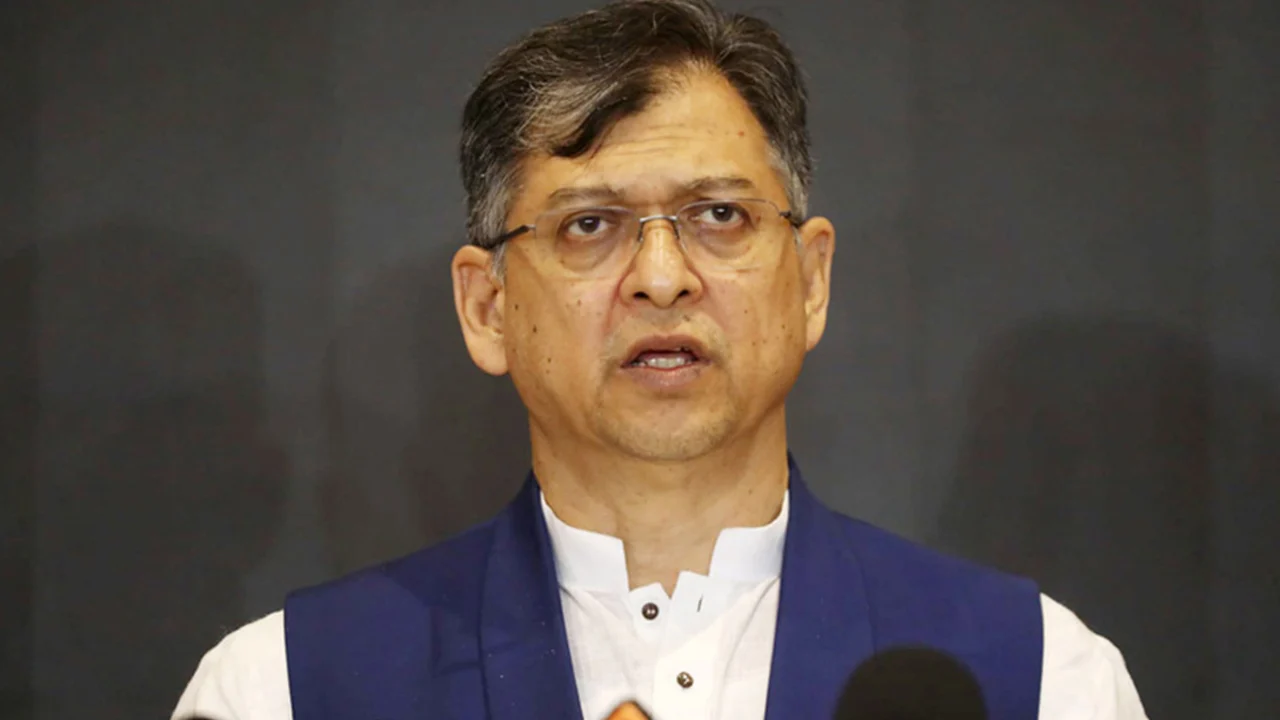
Home Minister Salahuddin Ahmed said today the government has decided to step up security at Rohingya camps in Cox’s Bazar by rebuilding damaged barbed-wire fencing, installing CCTV cameras and solar-powered lights, and setting up two new army camps in areas identified as hotspots for abduction and extortion.
The decisions were taken at a regular coordination meeting of the National Committee on forcibly displaced Myanmar nationals (FDMNs), chaired by the Home Minister.
The meeting brought together the foreign minister, disaster management and relief minister, social welfare minister, Refugee Relief and Repatriation Commissioner (RRRC), representatives of the Armed Forces Division, and senior officials of law-enforcement agencies, including the police, Border Guard Bangladesh (BGB) and Coast Guard.
The Home Minister said the government holds such coordination meetings every two to three months to review law and order, administrative management, relief operations and security concerns inside the camps, including drug trafficking and the activities of armed groups.
As part of the enhanced security measures, damaged sections of the camps’ barbed-wire fencing will be repaired, while CCTV cameras will be installed at regular intervals.
Solar-powered lights as well as watchtowers and control towers will also be set up to strengthen surveillance.
The government has also decided to establish two new army camps in the hilly areas of Rongikhali and Noakhalipara, where incidents of abduction and ransom-taking have been reported regularly.
The new camps will operate under the command of the 10th Infantry Division based in Ramu.
Under normal circumstances, joint operations inside the camps are conducted under the leadership of a DIG of the Armed Police Battalion (APBn).
However, in the event of an emergency or a war-like situation along the border, operations will be conducted in accordance with the standard operating procedure (SOP), under the leadership of a brigadier general of the Bangladesh Army, the minister said.
The government has also moved to strengthen the investigative capacity of the APBn. Around 400 sub-inspector-level officers serving in the force have been granted legal authority to investigate crimes such as drug trafficking, online gambling and human trafficking in the camps.
Responding to questions from journalists, the Home Minister said there was no proposal before the government, to his knowledge, to construct a separate prison exclusively for Rohingyas.
On the long-delayed repatriation of Rohingyas to Myanmar, the minister expressed hope that the process could eventually move forward under UN leadership and with support from the international community.
He acknowledged, however, that the crisis is becoming increasingly complex and difficult to resolve.
On public confidence on the police, the Home Minister said earning and maintaining people’s trust remains one of the force’s principal responsibilities and challenges.
Ultimately, he said, it is the people who will judge how much confidence the police have been able to earn.
