

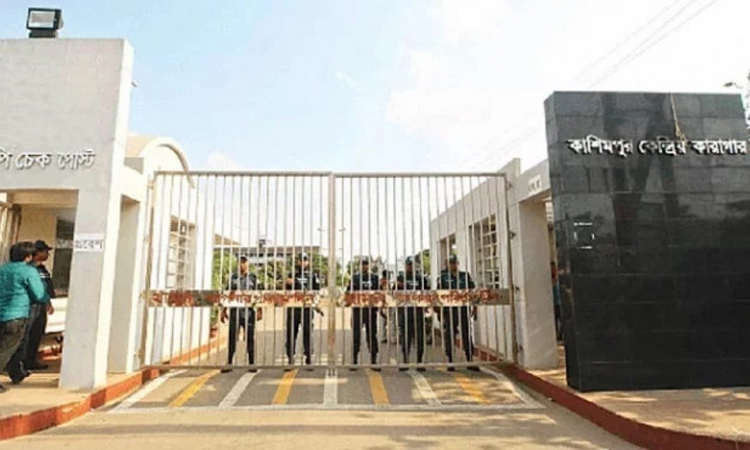
Behind the high walls of Kashimpur Central Jail-2, a quiet transformation is underway.
Rather than spending their days idly, inmates are operating machinery, producing household essentials, stitching uniforms and manufacturing furniture-all while earning money and acquiring skills that could help them rebuild their lives after release.
At the heart of this initiative is a growing prison-based industrial programme that seeks to redefine the role of correctional facilities-from places of confinement into centres of vocational training, productive employment and rehabilitation.
Depending on their work, some inmates earn between Tk 5,000 and Tk 7,000 a month. They can use the money for personal expenses or send part of their earnings to their families.
One of its flagship ventures is a modern soap manufacturing facility producing three varieties under the brand name Prison Fresh Soap.
The soap manufacturing facility was inaugurated on July 6, this year at Kashimpur Central Jail-2.
Equipped with modern automated machinery, the factory has a production capacity of approximately 1,500 soap bars per hour.
Each bar has an initial selling price of Tk 50.
Inmates participate in different stages of the production process, beginning with the mixing of raw materials and chemicals.
The mixture is then processed through a three-roll mill before being shaped using a plodder machine.
Branding, stamping, packaging and preparation for distribution are also carried out by the inmates.
Alongside soap production, inmates are engaged in garment manufacturing, furniture production, printing, notebook and register making, as well as bakery operations.
The financial incentive is equally significant. Inmates receive a share of the profits generated from product sales, with half of the profits are allocated to them.
The initiative provides hands-on exposure to industrial production while helping prisoners develop technical and operational skills.
According to jail authorities, Kashimpur Central Jail-2 currently houses 5,569 inmates, of whom 149 are engaged in various production activities.
Jail Superintendent Mohammad Arifur Rahman said the programme is helping inmates gain practical experience in machinery operation, production management, quality control, packaging and industrial safety.
Such experience, he noted, could improve their employment prospects after release, particularly in soap manufacturing, cosmetics and other industrial sectors.
It may also encourage some to establish small businesses of their own.
Additional Inspector General of Prisons Colonel Mesbahul Alam Salim told BSS the initiative was designed to make inmates financially self-reliant while equipping them with practical skills.
He said inmates at Kashimpur Central Jail-2 were involved in manufacturing soap, clothing and furniture, as well as working in bakery and printing facilities.
The initiative is part of a broader government development plan, with authorities considering the gradual introduction of similar production-based programmes in other prisons across the country.
Mohammad Masud Hasan Jewel, Jail Superintendent (Logistics and Media) at the Directorate of Prisons in Dhaka, said the objective is to transform prisons from mere detention facilities into centres of training, productivity and employment.
He said the programme focuses on rehabilitation, skills development and creating opportunities for inmates to earn a livelihood after completing their sentences.
The Directorate of Prisons estimates that the country’s 75 prisons collectively require approximately 100,000 soap bars-90,000 for inmates and another 10,000 for prison officials and employees.
Initially, Prison Fresh Soap will be supplied to meet the internal demand of correctional facilities.
Authorities are also planning to expand commercial sales in the open market once the internal requirements are met.
The move is expected to reduce dependence on externally purchased soap and generate savings for the government. Officials also believe that expanding prison-based manufacturing could create additional revenue to support improvements in prison facilities.
The significance of the initiative extends beyond financial earnings. By engaging in structured production activities, inmates are gaining technical knowledge, workplace discipline, teamwork and a sense of responsibility-qualities that could prove valuable when they return to society.
Prison-based industries have increasingly been viewed as an important component of rehabilitation in correctional systems around the world. Providing inmates with marketable skills and employment opportunities can help ease their transition into society and potentially reduce the risk of reoffending.
Bangladesh’s prison system dates back to 1788, when a detention facility, known as a criminal ward, was established in the Chawkbazar area of Old Dhaka during British rule.
Over the following decades, the system expanded, with prisons established in various district and sub-divisional headquarters in 1836 and a coordinated prison management structure introduced in 1864.
Nearly two and a half centuries after its establishment, the country’s prison system is witnessing a different kind of evolution-one that places greater emphasis on productivity, vocational skills and rehabilitation.
At Kashimpur, the message is increasingly clear: imprisonment need not mean an end to opportunity.
With the right skills, incentives and support, time spent behind bars can also become preparation for a more productive life beyond them.
