

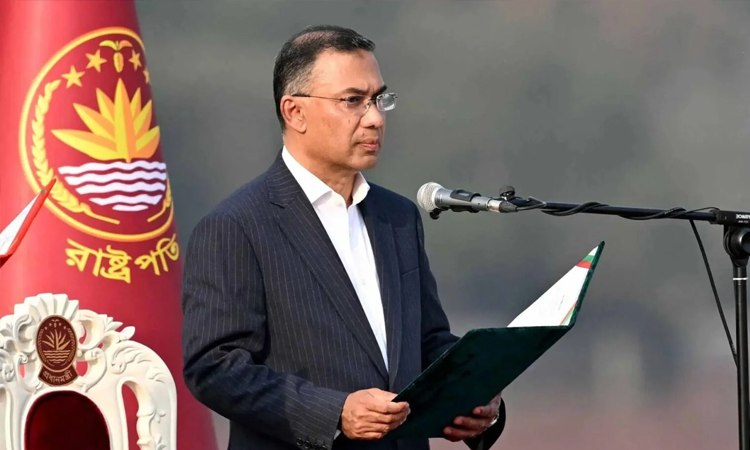
A birthday is generally a personal milestone, but in the case of a national leader, it can become an important occasion to assess the country’s trajectory and the responsibilities of leadership. As Bangladesh Prime Minister Tarique Rahman’s birthday on 20 November approaches, his long political journey, the pledges made in his election manifesto and public expectations regarding democratic stability, economic security and social justice are once again coming into focus.
Tarique Rahman’s rise to the premiership is the culmination of a long and arduous political journey. As the eldest son of martyred President Ziaur Rahman and former Prime Minister Begum Khaleda Zia, he formally joined the Bangladesh Nationalist Party (BNP) in 1988 and gradually assumed important organisational responsibilities. His political career has traversed numerous ups and downs, encompassing grassroots party-building, national election campaigns, imprisonment and nearly 17 years of exile in London.
His return to Bangladesh on 25 December 2025 marked the beginning of a new chapter in his political life. Just five days later, having overcome the grief of his mother’s death, he assumed the position of BNP chairman on 9 January 2026. Subsequently, when the party won a majority of seats in the parliamentary election on 12 February, he assumed the responsibilities of the country’s prime minister.
Although his political inheritance and personal adversity have shaped his journey, governing a country of 180 million people demands a different kind of statesmanlike wisdom. The central question facing the present administration is no longer how he reached the highest office, but rather how he will exercise the authority entrusted to him in the pursuit of democratic governance, economic recovery, public welfare and international diplomacy.
From Political Legacy to an Independent Legacy
Tarique Rahman’s political identity has long been closely intertwined with the legacy of his parents. His father, Ziaur Rahman, was the great Proclaimer of Bangladesh’s Independence, a sector commander in the Liberation War, a former president and the founder of the BNP. His mother, Begum Khaleda Zia, served as prime minister three times and remained at the centre of the country’s democratic politics for decades, enjoying unparalleled popularity.
After formally entering politics in 1988 from Gabtali in Bogura, Tarique Rahman worked to expand the party’s organisational base and played an important role in the general elections of 1991 and 2001. He was appointed Senior Joint Secretary General of the party in 2002 and Senior Vice-Chairman in 2009. However, his political career suffered a major setback during the military-backed caretaker government. Arrested in March 2007, he was imprisoned and subjected to brutal physical and psychological torture. Released on bail in September 2008 to receive treatment for serious spinal injuries, he went to London, where he spent nearly 17 years in exile, directing the party’s strategy and organisational activities. Despite repeated attempts, he was unable to return home during that period. The broadcast of his statements in the media was also prohibited.
His return home in December 2025 generated widespread enthusiasm among party leaders and activists, and a few days later, following Begum Khaleda Zia’s death, the full weight of the party’s leadership fell upon his shoulders. However, political inheritance alone cannot immortalise a leader in history. Tarique Rahman’s enduring legacy will depend on the quality of his administration, the transparency of his policy decisions and his commitment to building strong state institutions capable of serving all citizens, irrespective of political affiliation.
An Assessment of the First Nine Months: Promises versus Reality
By November, the administration will have completed nearly nine months since the government was formed in February 2026. During this period, positive developments have included the functioning of Parliament, a sense of political stability under an elected government and the Prime Minister’s relatively restrained and unassuming engagement with the public. Some initiatives in social security and infrastructure have also become visible as part of the programme undertaken during the first 100 days.
Nevertheless, the experience of the first nine months has also revealed a gap between promises and reality. Inflationary pressures, sluggish employment growth and the cost of everyday living remain sources of concern for ordinary people. In addition, effective measures are needed to fully restore law and order and to stop the banned Awami League from engaging in sabotage and killing people.
Democracy, Constitutional Reform and the Role of the Opposition
The public’s foremost expectation of the present government is the restoration and strengthening of democratic institutions. Under the slogan ‘Bangladesh First’, Tarique Rahman unveiled the BNP’s 2026 election manifesto on 6 February, outlining 51 pledges across five broad sectors. Nine areas have been prioritised: institutional reform, combating corruption, the rule of law, accountability, social protection, health, education, employment and economic development.
At the heart of this reform agenda lies the implementation of the ‘July National Charter’ and far-reaching constitutional and electoral changes. These include the introduction of a bicameral Parliament, setting limits on the tenure of the Prime Minister and ensuring a balance of power among state institutions. Against the backdrop of longstanding public concerns about excessive centralisation of executive power and the erosion of the autonomy of state institutions, these commitments carry considerable significance. However, their implementation will require more than a parliamentary majority; it will necessitate all-party dialogue, transparent processes and the equal application of constitutional safeguards. The cooperation of the opposition will also be essential.
Combating Corruption and Restoring Public Confidence
Rampant corruption remains one of the principal obstacles to the country’s development. It increases the cost of doing business, discourages investment, weakens government agencies and deprives citizens of essential services. At the time of announcing the manifesto, Tarique Rahman identified eliminating corruption, establishing the rule of law and ensuring administrative accountability as prerequisites for national progress.
To make anti-corruption measures credible, the Anti-Corruption Commission (ACC) must be allowed to operate independently, while transparent oversight must be established in public procurement, infrastructure projects, government recruitment and the management of state-owned enterprises. At the same time, reforming everyday public service delivery is essential to ensure that ordinary people can access healthcare, education and civic certificates without political patronage or bribery. The Prime Minister has already issued strict directives on this matter.
Economic Relief, the Banking Sector and Social Protection
For ordinary people, the principal measure of the government’s success is economic stability, particularly controlling inflation, increasing wages and creating jobs. To reduce excessive dependence on the ready-made garment sector, the BNP manifesto emphasises reopening closed industrial facilities, supporting small and medium-sized enterprises (SMEs), expanding international payment gateways, promoting the ‘Make in Bangladesh’ initiative and diversifying exports in pharmaceuticals, agro-processing, information technology and light engineering. To retain domestic and foreign investment, energy security, the removal of infrastructural bottlenecks, access to loans on favourable terms and policy stability must be ensured.
Reforming the banking sector and financial institutions is now one of the foremost priorities in economic recovery. Efforts to strengthen Bangladesh Bank’s supervision, restructure state-owned and weak banks and restore depositors’ confidence must be pursued consistently to address the burden of non-performing loans, capital shortfalls and deficiencies in governance. Only when discipline and transparency are restored to the financial sector will business, trade and investment regain momentum.
Alongside macroeconomic reforms, the government has prioritised establishing targeted social safety nets. Within the first 100 days of taking office, the administration launched the ‘Family Card’ programme to provide low-income households with Tk 2,500 a month or equivalent assistance in essential commodities. It also launched the ‘Farmer Card’ programme to ensure subsidies, low-interest loans, crop insurance and fair prices for farmers, fish farmers and livestock breeders. Initiatives have also been undertaken to provide honorariums to religious leaders and free uniforms to primary school pupils. To ensure these programmes remain sustainable and effective, genuine beneficiaries must be selected through transparent, data-driven processes free from local political influence, so that the schemes serve as stepping stones towards self-reliance rather than substitutes for employment.
Human Development, Climate and Foreign Policy
Investing in the education and health of the younger generation is essential for long-term prosperity. The manifesto pledges practical and vocational education reform, the use of technology in classrooms, a school meals programme and the promotion of women’s education, alongside the recruitment of 100,000 health workers and the strengthening of maternal, child and preventive healthcare services at district level. Bangladesh can fully harness its demographic dividend by providing young people with digital literacy, technical training and opportunities to participate in national policymaking.
Rural livelihoods and food security are closely linked to environmental protection and sound water management. Work has already begun in the initial months on the government’s pledge to excavate and re-excavate 20,000 kilometres of rivers and canals for irrigation, drainage and water conservation. However, addressing climate risks such as floods, cyclones, increasing salinity and river erosion will require scientific planning alongside excavation, strict prevention of river encroachment and the engagement of local communities.
In the social sphere, overcoming longstanding and intense political polarisation requires the practice of equal citizenship. Full security, dignity and legal protection must be ensured for religious minorities, ethnic communities, women and marginalised groups, irrespective of political influence. Similarly, the proposed ‘Truth and Healing Commission’ in the manifesto must operate entirely independently and in accordance with due legal process, so that the cycle of vengeance can be brought to an end once and for all.
On the international stage, the success of Tarique Rahman’s ‘Bangladesh First’ policy will depend on pursuing pragmatic and constructive diplomacy while safeguarding national sovereignty. Maintaining balanced relations with neighbouring countries on trade, connectivity, energy, border security and the sharing of water from common rivers, while also cultivating effective diplomatic relations with global powers, the United Nations, climate forums and countries hosting Bangladeshi migrant workers to protect their interests, will determine the success of the government’s foreign policy.
A Legacy Will Be Earned Through Work
The expectations surrounding Prime Minister Tarique Rahman’s administration on his birthday extend beyond the party’s boundaries and have become expectations of the nation as a whole. Citizens want a state in which institutions are accountable, justice is equal for all, economic growth is inclusive and dissent is respected. Ultimately, Tarique Rahman’s place in Bangladesh’s history will not be determined by his past struggles or the strength of his parliamentary majority, but by the extent to which his government can bring about meaningful and practical changes in the everyday lives of ordinary people and protect their democratic rights.
We are optimistic. Tarique Rahman is making vigorous efforts to move the country forward from the ruins left behind by the ousted government. He has taken various initiatives to restore the morale and vitality of law enforcement agencies. Efforts to bring the economy back from the brink of collapse onto a path of prosperity are continuing. The media are enjoying the highest degree of freedom compared with any previous period in the country’s history. Freedom of expression is unrestricted. This must continue.
