

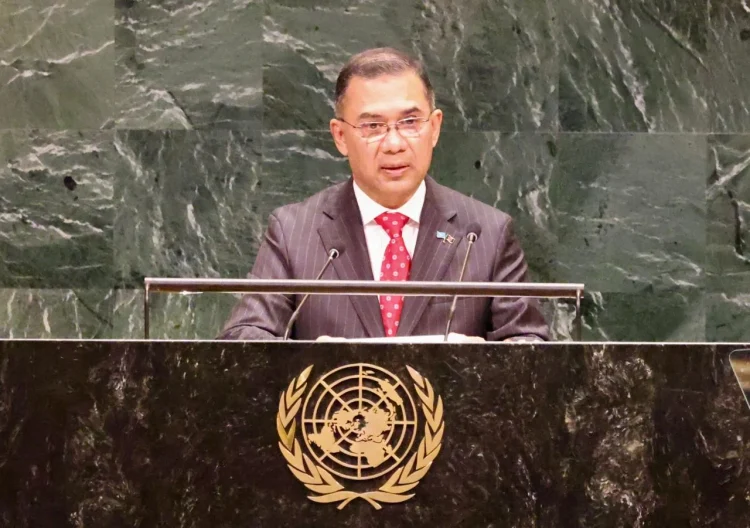
Bangladesh has called for stronger international cooperation to ensure predictable and sustainable financing for future pandemic preparedness and to build robust, self-reliant, equitable and resilient health systems.
Prime Minister Tarique Rahman’s message was conveyed by his Special Assistant for Health Dr SM Ziauddin Hyder at a high-level meeting on pandemic prevention, preparedness and response held at the UN headquarters in New York this afternoon (local time) on the sidelines of the 81st session of the United Nations General Assembly.
Dr Hyder stressed the need to view pandemic preparedness not merely as an expense for responding to emergencies but as a long-term investment in human security, economic stability and sustainable development.
He said effective coordination among governments, international organisations, development partners, multilateral financial institutions, the private sector, academics, researchers and communities is essential for pandemic preparedness.
Highlighting Bangladesh’s national health priorities, he underscored the need to strengthen primary and preventive healthcare, modernise the health system, enhance disease surveillance and laboratory capacity, and strengthen the health workforce.
Dr Hyder also said the government of Bangladesh is committed to making the best use of digital technology to build a more effective, equitable and resilient health system.
Mentioning the government’s various initiatives to strengthen global pandemic preparedness, he said Bangladesh is ready to work with the United Nations, the World Health Organization, international financial institutions, development partners and other member states to advance a global pandemic preparedness framework based on equity, solidarity, shared responsibility and collective action.
The high-level meeting was held under the theme “Strengthening multilateral and intergenerational approaches to prevent, prepare for and respond to pandemics and public health emergencies based on the principles of equity and solidarity.”
Concluding his remarks, Dr Hyder said no country can protect itself from the next pandemic alone. “To ensure a safer future, countries must invest in their own health systems while further strengthening international cooperation,” he said.
He said these efforts would strengthen the world’s collective preparedness to respond to the next public health emergency.
