


The United Nations World Food Programme (WFP) has launched anticipatory humanitarian assistance and shock-responsive social protection programmes in Bandarban ahead of peak flood risks to help vulnerable communities better withstand the impacts of flooding.
Under its Anticipatory Action (AA) programme, WFP has disbursed Tk 5,000 to each high-risk household through mobile financial services before floodwaters reach critical levels, based on weather forecasts and pre-agreed trigger indicators, said a press release here today.
Simultaneously, the UN agency activated its Shock-Responsive Social Protection (SRSP) programme, providing emergency cash top-up assistance to vulnerable families already covered under the government’s social protection schemes.
Implemented through WFP’s partner Bolipara Nari Kalyan Samity (BNKS), the combined initiative has benefited more than 15,600 households, or around 75,000 people, in Bandarban Sadar and Lama upazilas.
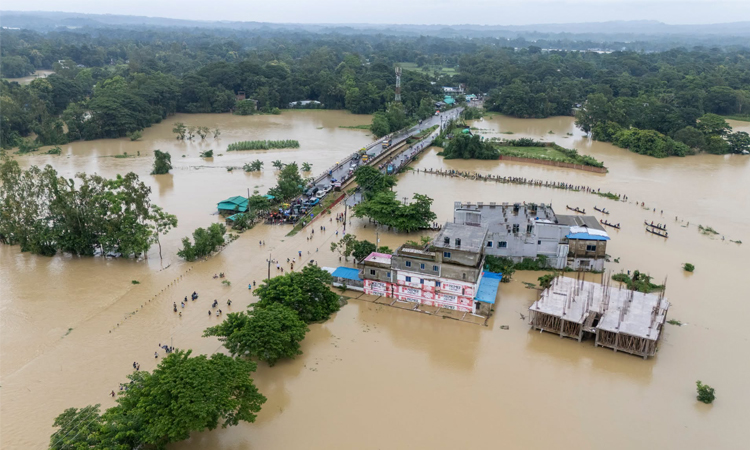
The intervention comes as continuous heavy rainfall has triggered flooding across the Chattogram Hill Tracts, particularly in Bandarban, Rangamati and Khagrachhari, with weather forecasts warning of further heavy rainfall in the coming days that could worsen the situation.
“Climate-related disasters are becoming more frequent and severe in Bangladesh. This makes acting before disasters strike more important than ever,” said Coco Ushiyama, WFP Representative and Country Director in Bangladesh.
“By delivering assistance before the worst impacts of flooding occur, we are helping families protect their food security, livelihoods and assets. At the same time, by strengthening and effectively utilising the national social protection system, we can rapidly scale up support for vulnerable people during times of crisis,” she added.
Bangladesh is among the countries most vulnerable to climate change, with recurrent floods posing serious threats to lives, livelihoods and food security, particularly in the Chattogram Hill Tracts.
Since 2017, WFP has been implementing anticipatory action programmes in Bangladesh under the leadership of the government and in collaboration with development and humanitarian partners.
According to WFP, studies conducted jointly with its partners show that every US$1 invested in anticipatory action can generate up to US$7 in avoided losses and additional benefits compared with conventional post-disaster emergency response.
The agency is also working with the Bangladesh government to strengthen the country’s social protection system so that it can respond more quickly to climate-induced disasters.
Through the SRSP approach, existing government safety net programmes can be rapidly expanded during emergencies to deliver timely assistance to affected and at-risk households, preventing them from falling into deeper hardship.


