


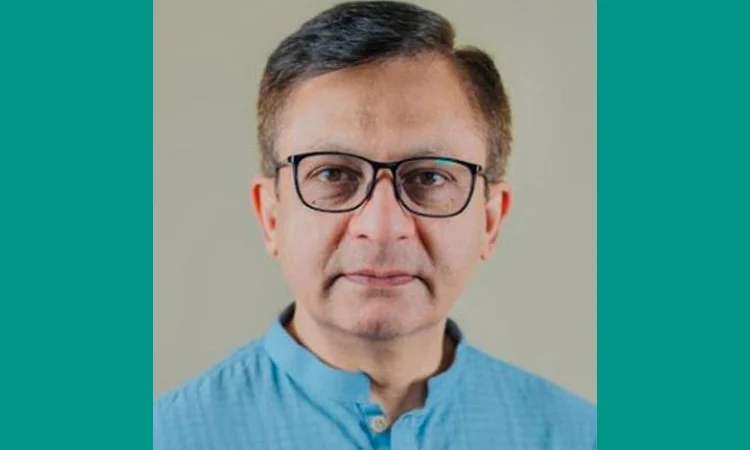
Commerce, Industries and Textiles and Jute Minister Khandakar Abdul Muktadir today said the government will take an initiative to establish several artificial intelligence (AI) training centres in Sylhet to equip young people with skills in AI and information technology.
“The initiative will start in Sylhet and will gradually be expanded to other districts of the division,” he said while addressing a reception and farewell programme organised by the Dhaka University chapter of Jalalabad Chhatra Kalyan Samity at the TSC auditorium here, said a press release.
The minister said the proposed training centres would help young people develop skills suitable for freelancing and the international IT sector, creating opportunities to earn foreign currency for the country.
“We will start in Sylhet and then take it to other districts of the division. We will establish several AI training centres there,” he said.
Highlighting the potential of freelancing, particularly in Sylhet, Muktadir said many young Bangladeshis are already earning between $500 and $5,000 a month through freelancing, while some highly skilled freelancers earn considerably more.
“The objective of the training programme is to spread this opportunity among the new generation and enable more young people to become self-reliant through income generation,” he said.
He said AI and IT-based training would enable young people not only to earn foreign currency through freelancing but also to bring IT-related work from foreign companies to Bangladesh.
The minister also stressed the need for increased investment in education, health, research and innovation for sustainable national development.
“Development is an integrated process. Countries that have progressed sustainably have made fundamental investments in health, education, research and innovation,” he said.
He said Bangladesh still needed to address fundamental challenges in education and health before reaching a stage where it could make adequate investments in research.
“Without sustained and long-term investment in these two sectors, it will not be possible to develop skilled human resources and ensure sustainable economic progress,” he added.
Referring to the government’s plans, Muktadir said education and health had been identified as two priority sectors after the present government assumed office.
He said the government aims to gradually increase budgetary allocations for both sectors, with a long-term goal of investing the equivalent of 5 percent of GDP in each.
He, however, acknowledged that reaching the target would not be easy and would require a long-term effort.
The minister expressed concern over the relatively weak educational indicators in the Sylhet region, saying the division lags behind the national average in literacy and several other education-related indicators.
He said the region faces challenges in the number of schools, pass rates, quality of primary education and students’ reading and numeracy skills in both urban and rural areas.
However, he said the situation was not due to any lack of talent or ability among the people of Sylhet.
A large number of people from the region have established themselves in education, politics, business and various professions in the United Kingdom, North America and other parts of the world, he said.
“Therefore, to understand the reasons behind the educational backwardness of the region, we need to look at infrastructure, institutional capacity, leadership and other structural limitations,” he added.
Muktadir also underscored the importance of higher education in building a knowledge-based society and a prosperous future.
He urged university students not to limit their university life to obtaining degrees but to develop leadership, research and innovation skills and prepare themselves as capable human resources for nation-building.
Addressing newly admitted students, he urged them to make the best use of university opportunities to develop skills that would enable them to contribute meaningfully to society and the country.
He also urged graduating students to uphold honesty, responsibility and a spirit of service to the country in their professional lives.
Praising the activities of the Jalalabad Chhatra Kalyan Samity, the minister said the organisation could serve as a “beacon” for uniting people from the Sylhet division living in Dhaka and contributing to the development of the region.
He called for greater communication and cooperation among current and former students to advance Sylhet.
Newly admitted students from three districts of the Sylhet region at Dhaka University were welcomed with flowers at the programme, while meritorious graduates were accorded a farewell reception.
Sylhet City Corporation Administrator Abdul Qaiyum Chowdhury, Industries Secretary Abdun Naser, Dhaka University Assistant Proctor Dr Ali Mohammad Kawsar, Daily Agamir Shomoy Editor Mostafa Mamun, Shipping Ministry Additional Secretary Ziaul Islam Munna and Supreme Court lawyers Mahdin Chowdhury and Foyez Uddin Ahmed also spoke at the programme.
The speakers highlighted the rich history and heritage of the Jalalabad region and stressed fraternity, mutual cooperation and students’ role in advancing education and overall development in their home region.
Jalalabad Chhatra Kalyan Samity, Dhaka University chapter General Secretary Saidur Rahman and Vice-President Shakera Bakhsh moderated the programme.
Current and former members of the organisation and a large number of students from the Sylhet region attended the event.


