


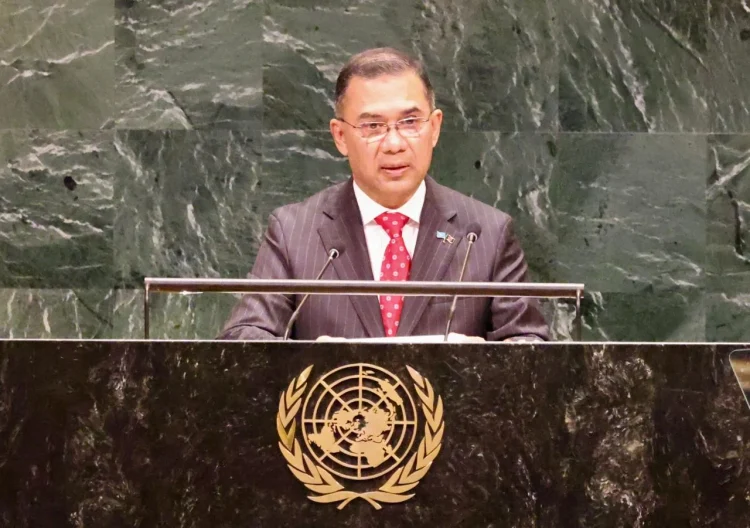
Bangladesh has called for stronger global action at the upcoming COP31 on climate justice, climate finance and adaptation support, stressing that countries like Bangladesh contribute little to global carbon emissions but bear severe impacts of climate change.
Prime Minister Tarique Rahman made the call while addressing the 81st session of the United Nations General Assembly here today, highlighting Bangladesh’s vulnerability to climate change and the need for greater international support to help vulnerable countries build resilience.
“Bangladesh expects stronger global action at COP31 on climate justice, climate finance and adaptation support,” he said.
The prime minister said Bangladesh is one of the countries most vulnerable to the adverse impacts of climate change despite its limited contribution to global carbon emissions.
In response to these risks, he said, Bangladesh has chosen the path of building resilience to withstand and overcome the impacts of climate change.
He said the government has strengthened programmes to protect the environment and address climate-related risks at the national level.
As part of these efforts, the government has launched a programme to plant 250 million trees across the country over the next five years, while placing emphasis on clean and solar energy.
The government has also launched a programme to excavate 20,000 kilometres of canals across the country to help address flooding and drought, he said.
Tarique Rahman said the government has begun implementing the Teesta Master Plan and the Padma Barrage project as part of its efforts to improve water management, increase freshwater flow into the Sundarbans and conserve water through large reservoirs.
He also highlighted Bangladesh’s commitment to transboundary water cooperation.
“While strengthening domestic measures for water conservation and pollution prevention, the government has reaffirmed its commitment to cooperation in transboundary water management by signing the 1992 ‘Water Convention’,” he said.
The prime minister’s call comes as Bangladesh seeks greater international attention to the disproportionate climate burden faced by vulnerable developing countries, particularly in areas of adaptation and climate finance.
He concluded his address by reaffirming Bangladesh’s commitment to the principles and values of the United Nations and the cause of global peace.


